You want to draw birds that feel alive, not just look like feathery shapes. The secret isn’t just talentit’s understanding the incredible machinery underneath. A great bird anatomy guide bridges the gap between scientific ornithology and expressive art, giving your work authenticity and dynamism.
Think of it as learning the rules before you break them. Knowing how a wing folds or why a neck bends a certain way frees you to stylize with confidence. For a fantastic entry point that balances science with accessibility, many artists swear by How Birds Work. It visually breaks down form and function in a way that directly translates to your sketchbook.
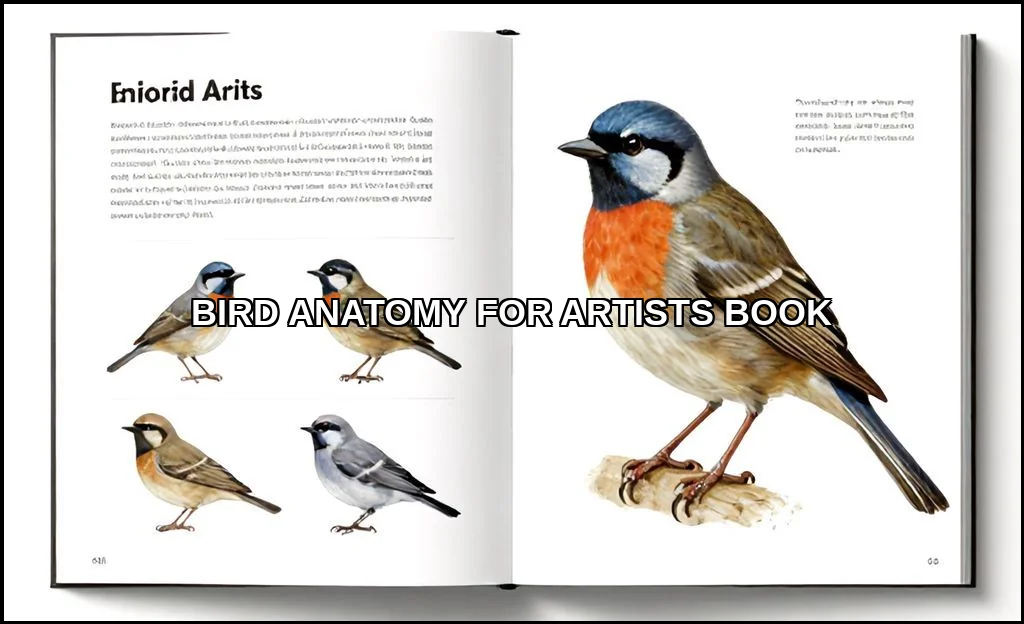
Introduction to Bird Anatomy for Artistic Accuracy
Why does anatomy matter so much for artists? Because every line you draw communicates structure. A misplaced joint or an impossible wing position can make even a beautifully rendered bird feel “off.” Your goal is internalizing the framework so you can sketch from any angle, in any pose.
Modern resources go beyond static diagrams. While classic books from publishers like Dover Publications and Watson-Guptill offer foundational knowledge, today’s artists also leverage digital 3D anatomy models on platforms like Sketchfab. These allow you to rotate a bird skeleton in space, a game-changer for understanding complex perspectives.
Start with common backyard birds like robins or sparrows. Their familiar forms make it easier to see anatomical principles in action. This approach dovetails perfectly with field sketching techniques, where you observe life and apply your anatomical knowledge in real time.
Core Skeletal Structure: Foundation for Form
The skeletal framework is the armature you build upon. Birds have highly modified skeletons for flight, characterized by lightness and fusion. Key areas every artist should study include the skull, the elongated neck vertebrae, and the fused pelvic region called the synsacrum.
The most distinctive feature is the massive keel (sternum), which anchors the powerful flight muscles. Notice how the ribs are overlapped by uncinate processeslittle hook-like bones that add strength. This isn’t just trivia; it affects the torso’s rigid, barrel-like shape.
When looking for the best book for drawing bird skeletons, seek out clear avian osteology diagrams. Authorities like Eliot Goldfinger provide meticulous detail, while artist-educators like John Muir Laws focus on the simplified shapes you need for drawing. Compare these views.
- Skull & Beak: Lightweight, with large eye sockets. The beak is a bony core covered in keratin.
- Vertebral Column: Neck is incredibly flexible; the back is rigid and fused for stability.
- Pectoral Girdle: Includes the coracoid, scapula, and clavicle (wishbone), forming a sturdy tripod for wing attachment.
- Pelvic Girdle: The synsacrum provides a solid foundation for leg muscles and balance.
Feathers: Types, Groups, and Layering for Texture
Feathers are where anatomy meets artistry. They aren’t randomly placed; they grow in specific tracts called feather tracts (pterylae), with bare skin (apteria) between them. This arrangement dictates the flow and layering you see.
Understanding feather anatomy is key to rendering texture. Each type has a purpose. Contour feathers define the sleek outer shape. Down provides insulation. Semiplumes add volume. And the specialized flight feathersprimaries and secondariesare what make flight possible. Studying plumage patterns across species will elevate your work, whether you’re painting a detailed hawk or designing a fantasy creature. For inspiration on housing real birds, check out our guide on the best birdhouses available.
How to Draw Realistic Bird Feathers Step by Step
- Block in the Tracts: Lightly sketch the major feather groups (wing, tail, breast) based on the underlying body form.
- Define the Major Feathers: Indicate the large primary and secondary flight feathers. Remember, they overlap like shingles on a roof.
- Add Layer and Texture: Work from large to small. Add the smaller covert feathers that smooth the transitions, then suggest individual barbs and shafts on key feathers for detail.
- Follow the Flow: Every feather’s direction follows the contours of the body and the forces of air or water. This creates a believable, cohesive look.
Muscles and Mechanics: Capturing Movement and Pose
Bones provide form, but muscles create life. The bird muscle diagram shows two major groups: the massive pectorals for the downstroke and the smaller supracoracoideus for the upstroke. These attach to that huge keel. The leg muscles are concentrated high up near the body, giving birds their distinctive skinny lower legs.
This isn’t just static knowledge. It’s the key to flight mechanics. The shape of the wing, the angle of attack, the twist of the primariesall are driven by muscle. To capture a bird mid-hop, you need to know which leg muscles are contracted. For a deep dive into avian health and mechanics, a great official source like the Cornell Lab of Ornithology can be invaluable.
Consider the comparative anatomy of bird wings vs bat wings. Both enable flight, but a bird’s wing is supported by elongated arm and finger bones with feathers, while a bat’s is a membrane stretched over dramatically elongated fingers. Understanding these differences prevents generic “winged creature” designs.
Practical Application: From Anatomy Studies to Finished Art
So how do you move from textbook diagrams to original art? The process is iterative. Start with analytical studiesdraw just the skeleton, then just the muscle groups. Then, layer the feather tracts on top. This builds a mental 3D model.
Apply this to bird anatomy reference for character design. Want a majestic, powerful creature? Exaggerate the keel and pectoral mass. Need something agile and fast? Emphasize a streamlined body and long primary feathers. Your anatomical knowledge becomes a toolkit for invention.
Integrate with gesture drawing. Do quick 30-second sketches focusing on the action line and the angle of the bird wing structure. Then, use your anatomical knowledge to “flesh out” the most promising gestures. This combines life with accuracy.
| Study Type | Artistic Goal | Key Focus |
|---|---|---|
| Skeletal Study | Correct proportions and joint placement | Bird skeleton drawing, posture, foreshortening |
| Feather Group Study | Authentic texture and surface flow | Tracts, layering, directional strokes |
| Muscle & Movement Study | Dynamic, believable poses | Flight mechanics, weight distribution, force |
Your journey into ornithology for artists is a powerful way to deepen your craft. It transforms drawing from guesswork into informed creation. Remember, the best resource is the one you actually usewhether it’s a classic reference book, a digital model, or your own sketches from life at the park. Combine these tools. Observe relentlessly. Let the science inform your art, and let your art bring the science to life. Now, go draw something amazing.
