
You’ve seen the mess. The droppings, the nests, the constant fluttering around your security lights. It’s more than a nuisance; it’s a costly maintenance headache and a potential health risk. Bird proof light fixtures are specialized solutions designed to stop this cycle. They deter birds from roosting, nesting, or colliding with your lighting, keeping areas clean and functional.
For many property managers, the immediate goal is a clean, low-maintenance area. A product like the HappyBird Lighting Bird offers a simple, effective starting point. It’s a popular choice for its straightforward deterrent design, making it a solid option for residential patios or smaller commercial entries where birds like sparrows or starlings are a problem.
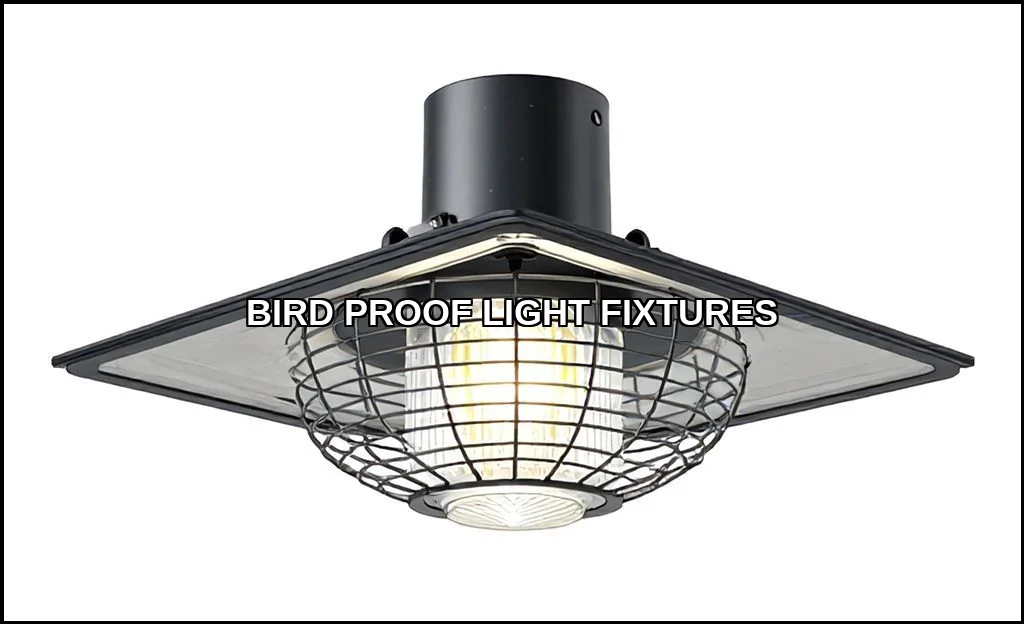
What Are Bird Proof Light Fixtures?
Think of them as your first line of defense. Bird proof light fixtures aren’t a single product but a category of solutions. They encompass the fixtures themselves, add-on deterrents, and specialized bulbs. The core principle is to make the area around the light inhospitable or confusing for birds without compromising illumination.
This includes physical barriers installed on fixtures, like bird spikes for lights or bird wire systems. It also covers electronic deterrents and the strategic use of specific light wavelengths. The best bird resistant fixtures often combine multiple approaches. For commercial buildings, this integrated strategy is key to long-term success and maintenance cost reduction.
Why This Matters Beyond Cleanliness
It’s not just about aesthetics. Bird droppings are acidic. They corrode metal fixtures, degrade wiring insulation, and create slip hazards. Nests block ventilation and are a fire risk near hot lights. There’s also the broader ecological angle, which an official source like the Audubon Society details extensively. Our lighting choices can disorient migratory patterns. A thoughtful bird friendly lighting plan addresses both your property’s needs and environmental responsibility.
Why Birds Are Attracted to Lights & The Problems
Birds don’t love your fixtures for their style. They’re drawn to the warmth, the shelter from elements, and the insects that swarm traditional bulbs. Pigeons and seagulls seek high, flat surfaces to survey their territoryyour lamp post or flood light canopy is perfect. Swallows and sparrows look for nooks to build nests.
At night, the problem shifts. Migratory birds can become trapped in beams of light, circling until exhausted. This is where understanding bird behavior and light attraction is critical. It’s why the question “do LED lights attract birds at night” has a nuanced answer. Older bulbs attract insects, which then attract birds. Certain LED spectrums are less attractive to both.
The fallout is real. You get damaged property, increased cleaning costs, and potential violations of local health codes. For a deeper look at avian health risks, consider how diseases spread in dense populations. This resource on how the bird flu does affect birds highlights why population control around human structures matters.
Types of Bird Proof Lighting Solutions
Your strategy should match the species and the scale. Heres a breakdown of the main product categories, from simple to sophisticated.
Physical Barriers & Add-Ons
These are the most direct bird deterrent lighting solutions. They create an physical obstacle.
- Bird Spikes for Lights: Strips of pointed rods installed on flat surfaces around the fixture. They prevent landing and roosting. Brands like Bird-B-Gone and Nixalite offer various materials (polycarbonate, stainless steel) for different aesthetics and durability.
- Bird Wire Systems: A low-profile system of posts and wires that creates an unstable landing zone. Less visually obtrusive than spikes for certain bird proof lamp posts.
- Sloped Surfaces: Adding angled panels to flat tops makes perching impossible. Often used as a retrofitting solution.
Electronic & Sensory Deterrents
These solutions use technology to harass birds without physical contact.
- Motion-activated deterrents: Devices that use sensors to trigger a startling responsea sudden spray of water, a loud sound, or a flash of lightwhen a bird approaches. Highly effective for protecting specific zones like a patio.
- Ultrasonic Repellers: Emit high-frequency sounds unpleasant to birds but inaudible to humans. Effectiveness can vary by species and environment.
- Visual Scares: Reflective tapes, predator decoys, or laser systems. These often require rotation to prevent birds from habituating.
Light Source & Wavelength Solutions
This is a proactive, built-in approach. By changing the light itself, you reduce the attraction.
- Wavelength-specific LEDs: Research shows birds are less sensitive to long-wavelength light (amber, red). Using bird repelling light bulbs in these spectrums can significantly reduce attraction at night. This is a core component of true bird safe outdoor lights.
- Directed Lighting: Using shields and full-cutoff fixtures to minimize light spill and skyglow. This focuses light where you need it and reduces the “beacon” effect for birds.
Choosing the right type often means combining categories. A bird proof security light might use wavelength-specific LEDs housed in a fixture with a sloped canopy to prevent nesting.
How to Install & Position Bird Deterrent Lights
Installation is where planning pays off. A haphazard setup wastes money and effort.
Step-by-Step Guide for Effective Placement
- Audit Your Problem Areas. Identify where birds roost, nest, or cause the most mess. Is it under the eaves near a wall pack? On top of the bird proof flood lights? Different problems need different fixes.
- Choose Your Solution Mix. For nesting swallows, physical exclusion is key. For pigeons roosting on a flat fixture top, spikes or a sloped cover work. For insects attracting birds to a porch light, switch to a warmer-color LED.
- Install Securely. Ensure all barriers are firmly attached. Birds will test for weaknesses. Use appropriate, weather-resistant fasteners for your fixture material (metal, wood, vinyl).
- Consider Height and Access. For high bird proofing outdoor fixtures, safety is paramount. Use a licensed professional for complex commercial installations.
- Angle Lights Downward. Position security and area lights to illuminate the ground, not the sky. This practice is increasingly supported by municipal lighting codes aimed at reducing light pollution.
Pro Tips for Long-Term Success
- Maintain Regularly. Check deterrents seasonally for damage or debris buildup. A spike strip filled with leaves becomes a nest.
- Combine Tactics. Use physical barriers to block preferred spots and sensory deterrents to keep birds from investigating new ones.
- Think About Beneficial Species. Your goal is to deter pest birds, not all wildlife. Avian deterrent lighting should minimize impact on bats, which are excellent for insect control. Using lights only when needed (with motion sensors) and choosing the right wavelength helps.
For illuminating other bird-friendly projects, like creating safe nesting spots, you might explore the best birdhouses that incorporate technology without harm.
Top Recommended Products & Brands
Navigating the market is easier when you know trusted names and product types. Heres a comparison to guide your search for the best bird proof light fixtures for patio or commercial use.
| Product Category | Best For | Notable Brands/Notes |
|---|---|---|
| Spike Strips & Physical Barriers | Flat surfaces on fixtures, ledges, beams. Long-term, passive protection. | Bird-B-Gone, Nixalite. Look for UV-resistant polycarbonate for discreet looks or stainless steel for maximum durability. |
| Electronic Repellents | Specific zones like loading docks, patios, signage. Immediate behavioral change. | Bird-X offers a range. Motion-activated sprayers (like ScareCrow) are highly effective for persistent problems. |
| Bird Proof LED Fixtures | New installations or full retrofits. The most integrated, low-maintenance solution. | Seek fixtures marketed as “full-cutoff” or “dark sky compliant.” Specify warm-color LEDs (3000K or less, amber if possible). |
| Retrofit Kits & Sloped Covers | Upgrading existing light fixtures to keep birds away without full replacement. | Many barrier brands offer custom-angle panels. Measure your existing fixture’s dimensions carefully. |
Making the Final Choice: Efficiency & Ethics
When comparing products, don’t just look at upfront cost. Consider the energy efficiency comparisons (LED vs traditional). A quality bird proof light that’s also an LED will save on energy and bulb replacement, offsetting the deterrent cost over time. Also, review any specific municipal lighting codes regarding light trespass and spectral outputyour solution should be compliant.
The most effective plan is layered. Start by eliminating the attractants (insects, warmth) with better bulbs. Then, physically block the preferred roosts. Use sensory deterrents for persistent offenders. This approach solves the immediate mess, reduces long-term costs, and aligns with broader efforts for bird friendly lighting.
Your outdoor lighting should work for you, not for the local bird population. By understanding why birds are there and implementing a strategic mix of solutions, you can reclaim your space. It’s a clear win: cleaner property, lower bills, and a smaller footprint on the night sky.
