The avian world is not always a peaceful one. Beyond the songs and bright plumage lies a complex, often ruthless struggle for reproductive success. One of the most fascinating battlegrounds is the nest itself, where intricate strategies of deception, theft, and defense unfold daily. This in-depth analysis explores the multifaceted interactions between bird species centered on nest appropriation, a critical concept in behavioral ecology.
Observing these behaviors in the field requires patience and the right gear. For birdwatchers keen to study these interactions without disturbing the subjects, a good pair of compact binoculars is indispensable. Many field researchers and dedicated enthusiasts rely on the Occer 12×25 Compact for its clarity and portability, making it easier to spot subtle behaviors from a respectful distance.
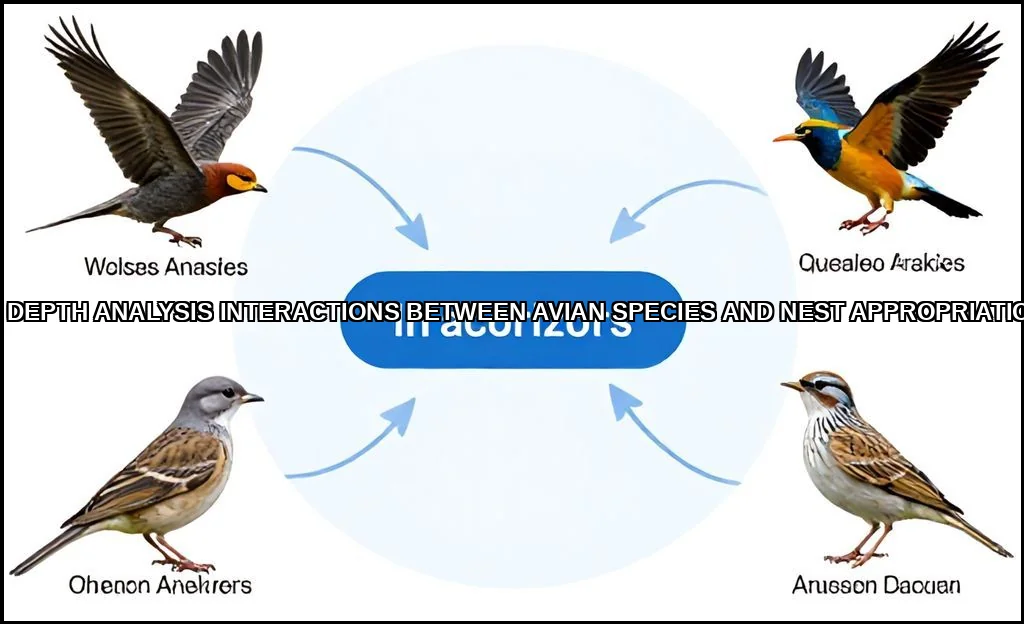
Introduction to Avian Nest Appropriation
At its core, nest appropriation is any instance where one bird species uses the nesting efforts of another for its own benefit. This isn’t a single behavior but a spectrum. It ranges from covert egg dumping to outright violent eviction. The driving force is always resource efficiency. Building a secure nest is energetically costly and time-consuming. Why build when you can borrow, steal, or hijack?
These interactions create powerful selective pressures, shaping the evolution, behavior, and even population dynamics of entire bird communities. From the classic dramas of brood parasitism to fierce battles over prime real estate, the nest site becomes an arena for an ongoing evolutionary arms race.
Types of Nest Interactions: Parasitism vs. Competition
It’s crucial to distinguish between the two main frameworks. They represent different strategies with distinct ecological impacts.
Brood Parasitism: The Art of Deception
Here, a female lays her eggs in the nest of a host species, tricking them into raising her young. This is obligate parasitism for species like the common cuckoo or brown-headed cowbirdthey never build their own nests. The parasite’s chick often hatches earlier, grows faster, and may evict the host’s own eggs or chicks. A key question for many is the difference between nest parasitism and predation. Parasitism exploits the host’s parental care; predation simply destroys the reproductive effort.
- Obligate Brood Parasitism: The parasite’s entire reproductive strategy depends on hosts. Think cuckoo host interactions.
- Facultative Nest Takeover: A bird may parasitize a neighbor of its own species or a different one when opportunity arises, like some ducks or even house sparrows.
Interspecific Competition: The Fight for Space
This is direct interspecific competition for the nest site itself. It’s avian kleptoparasitism of real estate. A larger or more aggressive species forcibly takes over a completed or partially built nest. The original owner is evicted, often after a fight. The European starling is a notorious example in North America, frequently displacing native woodpeckers and bluebirds. This nest site competition can limit where certain species can live and breed.
Key Species Involved: The Cast of Characters
While the common cuckoo and brown-headed cowbird are textbook examples, the global cast is much wider.
The Specialist Parasites
Beyond the well-known cuckoos of Eurasia, other obligate parasites have evolved remarkable specializations.
- African Honeyguides: These birds lead humans to bee hives and, uniquely, parasitize cavity-nesters. Their chicks are born with deadly hooks on their beaks to eliminate competition.
- Shiny & Screaming Cowbirds: While the brown-headed cowbird is a North American generalist, its South American relatives show fascinating variation. The shiny cowbird is also a generalist, while the screaming cowbird is a specialist, almost solely parasitizing the nests of another blackbird species.
- Great Spotted Cuckoo: This species often targets corvids like magpies, hosts capable of fighting back, leading to a different set of evolutionary adaptations.
The Common Victims and Competitors
Understanding the most common victims of avian nest appropriation requires looking at habitat and host defenses. Small songbirds like warblers, vireos, and sparrows are frequent targets for cowbirds. Cavity-nesters face intense pressure from starlings and house sparrows. The official source from the Cornell Lab of Ornithology provides excellent detail on cowbird hosts.
Behavioral Adaptations and Defense Mechanisms
This is where the evolutionary arms race becomes visible. Each offensive strategy selects for new defensive adaptations in hosts.
Parasite Offense: Stealth and Mimicry
Parasites have evolved incredible tricks. Egg mimicry is a classicparasite eggs evolve to look like the host’s to avoid detection and rejection. Rapid egg-laying allows a female cowbird to deposit an egg in under 10 seconds. Some brood parasite birds even monitor host nests, returning at the perfect moment for egg dumping. Research into how do cowbirds choose host nests suggests they surveil nest-building activity.
Host Defense: Vigilance and Rejection
Hosts aren’t passive victims. Host defense behaviors include:
- Nest Defense: Aggressive mobbing of parasites near the nest.
- Egg Rejection: Recognizing and removing foreign eggs. Some hosts, like the American robin, have become very adept at this.
- Abandonment: Deserting a parasitized nest entirely, a costly but sometimes necessary choice.
- Nest Architecture: Building nests with small entrances or deep cups that are harder to parasitize.
This coevolutionary dance means a parasite’s success in one region may fail in another, depending on the local host population’s learned defenses.
Ecological and Evolutionary Consequences
The ripple effects of these interactions are profound, impacting more than just the two species directly involved.
Population-Level Impacts
Heavy parasitism can suppress host population growth, especially for sensitive or endangered species. Nest usurpation by invasive species like the European starling has directly contributed to the decline of native birds across continents. This is a clear ecological impact of nest takeover.
Shaping Community Structure
These behaviors influence which species can coexist. They create a dynamic balance of power in an ecosystem. The threat of parasitism can even affect where a bird chooses to nest, pushing it into suboptimal habitat just to avoid interspecific nest competition.
Driving Evolutionary Change
The constant pressure is a powerful evolutionary engine. It drives the coevolutionary arms race of mimicry and detection. It can lead to speciation, as seen in some African finches that have diversified partly due to parasite pressure. The entire field of avian behavioral ecology is rich with questions born from these conflicts.
| Interaction Type | Primary Goal | Example | Outcome for Original Owner |
|---|---|---|---|
| Obligate Brood Parasitism | Exploit parental care | Common Cuckoo | Loss of reproductive effort, may raise parasite chick |
| Facultative Takeover | Acquire nest structure | House Sparrow | Complete eviction, loss of nest and site |
| Interspecific Competition | Secure nest site | European Starling | Violent eviction, loss of nest and site |
For those documenting these complex behaviors, resources from the Cornell Lab of Ornithology or the Audubon Society are invaluable. Their bird identification guides and citizen science projects, detailed in scientific journals, help build a broader picture. Serious study also depends on field research equipment like specialized cameras and, of course, reliable optics.
The drama at the nest is a microcosm of broader ecological forces. It’s a relentless push-and-pull between exploitation and survival, innovation and defense. Whether it’s the silent lie of a mimetic egg or the noisy brawl of a starling eviction, these interactions are fundamental to the story of avian life. They remind us that reproduction in nature is rarely a simple affair. It’s a strategic game with high stakes, played out in twigs and feathers, shaping the birds we see today. Understanding this hidden warfare deepens our appreciation for every songbird at the feedereach one is likely the descendant of a long line of survivors in this ongoing conflict.

