
Choosing a parrot is a thrilling decision. It’s also a serious long-term commitment. The choice between a majestic macaw and charming small parrots like budgies or cockatiels isn’t just about preference. It’s about matching a bird’s fundamental needs to your lifestyle, space, and resources for decades to come.
This isn’t a simple big-versus-small debate. We’re comparing vastly different life experiences. One involves a powerful, intelligent companion with the presence of a toddler. The other offers a more manageable, yet deeply engaging, feathered friend. Let’s break down the real-world differences to guide your avian pet choice.
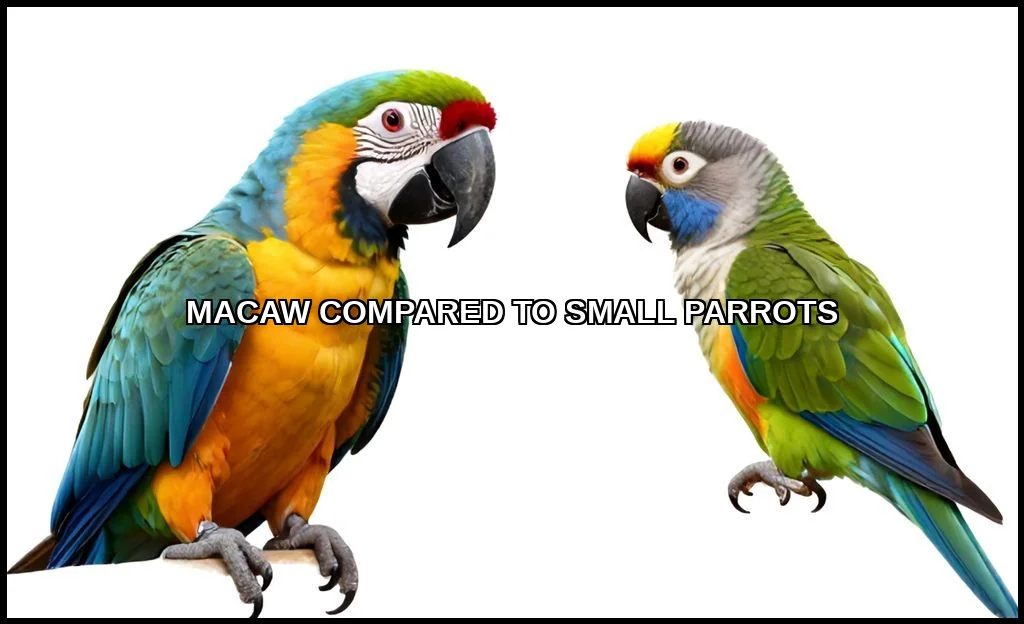
Macaw vs. Small Parrot: A Stark Overview
Imagine the difference between adopting a Great Dane and a Beagle. That’s the scale we’re discussing in this parrot size comparison. A large Scarlet Macaw can reach 35 inches long and demand a room of its own. A Budgie (parakeet) is a compact 7 inches and fits comfortably in a living room corner. This initial physical disparity cascades into every aspect of ownership.
The core topics? Size & Space Requirements, Noise Level & Vocalization, Lifespan & Commitment, Care Difficulty & Cost, and overall Temperament. Getting this macaw comparison right from the start prevents heartache for both you and the bird.
Physical & Environmental Needs: Cage, Space, and More
This is the most tangible difference. A macaw isn’t just a big bird; it’s a flying powerhouse. Its wingspan can exceed four feet. Its beak can crack a Brazil nut with ease. Consequently, its habitat must be a fortress.
How much more space does a macaw need than a lovebird? Exponentially more. We’re not just talking about cage size, but the entire environment.
Cage and Housing Reality
- Macaw Cage: Minimum dimensions start at 36″W x 48″D x 60″H, but larger is always better. The bar spacing must be strong (3/4″ to 1″) and the gauge thick to prevent bending. This cage becomes a major piece of furniture. For smaller large parrots, a sturdy option like the Yaheetech 52-inch Wrought iron cage can be a suitable starting point, but always verify bar strength for your specific bird.
- Small Parrot Cage: For a cockatiel or conure, a cage around 24″W x 24″D x 30″H is often adequate. Finding the best cage for them focuses more on design and safety features than on industrial strength.
The space doesn’t end at the cage. A macaw needs a dedicated, bird-safe room or large area for daily out-of-cage exercise. Their play stands must be heavy and solid. Small parrots need out-of-cage time too, but their play areas are less invasive to your home’s layout.
Behavioral Comparison: Noise, Smarts, and Social Needs
Here’s where the parrot ownership differences get loud. Literally.
The Decibel Discussion
All parrots vocalize. But the amplitude varies wildly. A macaw noise level is legendary. Their contact call is designed to travel miles through rainforest canopies. In your home, this translates to an ear-piercing shriek that can disturb neighbors through walls.
Are macaws louder than African Greys? Often, yes. While Greys are brilliant talkers, macaws possess a powerful, raw vocal projection that is physically louder. A budgie’s chatter or a cockatiel’s whistle is comparatively mild, though still present. It’s a constant background melody versus an occasional, startling alarm.
Intelligence and Social Complexity
Both large and small parrots are intelligent. However, a macaw’s cognitive abilities are often compared to a 3-5 year old child. They solve complex puzzles, understand cause and effect deeply, and require constant mental stimulation. Boredom in a macaw leads to severe behavioral issues like feather plucking and aggression.
Small parrots are clever too! Budgies can learn large vocabularies, and cockatiels are wonderfully social. But the intensity and depth of interaction required are generally less all-consuming than with a macaw. This is a key factor when considering is a macaw or a conure better for a first-time owner. The conure, a small-to-medium parrot, often presents a more manageable step into parrot companionship.
Curious about vocal talents? We’ve analyzed which parrots talk in depth, looking beyond sheer volume to clarity and mimicry skill.
Care & Commitment: The Long Haul
This is the sobering section. Parrots are not short-term pets. Their care requirements are a lifelong pact.
The Lifespan Factor
A macaw lifespan can easily span 50 to 80 years with excellent care. You are making a commitment for life, with plans needed for their care in your will. The budgie vs macaw lifespan contrast is stark: a well-cared-for budgie lives 7-15 years. This difference fundamentally changes the nature of the relationship and the owner’s life stage suitability.
Diet, Cost, and Daily Time
The financial and temporal investment scales with size.
- Diet: A macaw consumes a significant amount of fresh fruits, vegetables, nuts, and high-quality pellets. Cost difference between feeding a macaw and a parakeet? It can be 5 to 10 times more monthly. A parakeet’s diet is modest in comparison.
- Veterinary Care: Avian vets are specialists. Exams and procedures for a large bird are invariably more expensive. Anesthesia is riskier, and medications are dosed by weight.
- Time: A macaw needs several hours of direct, interactive socialization and out-of-cage time daily. Leaving it alone for a standard workday often leads to problems. Smaller parrots also need daily interaction, but they can be more independent in shorter bursts.
For authoritative details on species-specific nutrition, the official source from Lafeber is an invaluable guide for any owner.
| Consideration | Macaw (Large Parrot) | Small Parrots (e.g., Budgie, Cockatiel, Lovebird) |
|---|---|---|
| Typical Lifespan | 50+ years | 10-20 years (varies by species) |
| Daily Time Commitment | 4+ hours of direct interaction | 1-2 hours of direct interaction |
| Noise Impact | Very high; can disturb neighbors | Moderate to high; usually manageable |
| Space Requirement | Dedicated bird room/area | Large cage in common area |
| Suitability for First-Time Owners | Generally not recommended | Often a good fit with research |
Finding Your Perfect Feathered Match
So, which is right for you? It boils down to brutal honesty about your life.
Choose a macaw if: You have extensive parrot experience, a very stable home life, a soundproofed space or tolerant living situation, a budget for premium care, and you view this as a lifelong, child-like commitment. You’re ready for a demanding, brilliant, and emotionally complex companion.
Explore small parrot species if: You are a first-time or intermediate bird owner, live in an apartment or shared housing, have a more modest budget, or have concerns about a 50-year commitment. You want a deeply affectionate, intelligent pet without the extreme physical and auditory presence.
Visit rescues. Spend time with both types of birds. The reality of their presence is the best guide. This decision shapes the next several decades for you and your future avian family member. Choose not just with your heart, but with your practical, everyday life in mind.
