You’re probably wondering which parrot learns to talk the fastest. It’s a common question for anyone enchanted by the idea of a feathered conversationalist. The truth is, speed isn’t the only factor. Clarity, consistency, and the bird’s own personality play huge roles. But some species do have a clear edge when it comes to picking up human speech quickly and clearly.
Before you dive into training, setting up for success is key. A stressed or bored bird won’t learn. For many owners, creating a stimulating audio environment helps. Some find tools like the Talking Parrot No toy useful. It can play recorded phrases, adding variety to the daily repetition that speech training requires. It’s not a magic solution, but it can be a helpful supplement to your direct interaction.
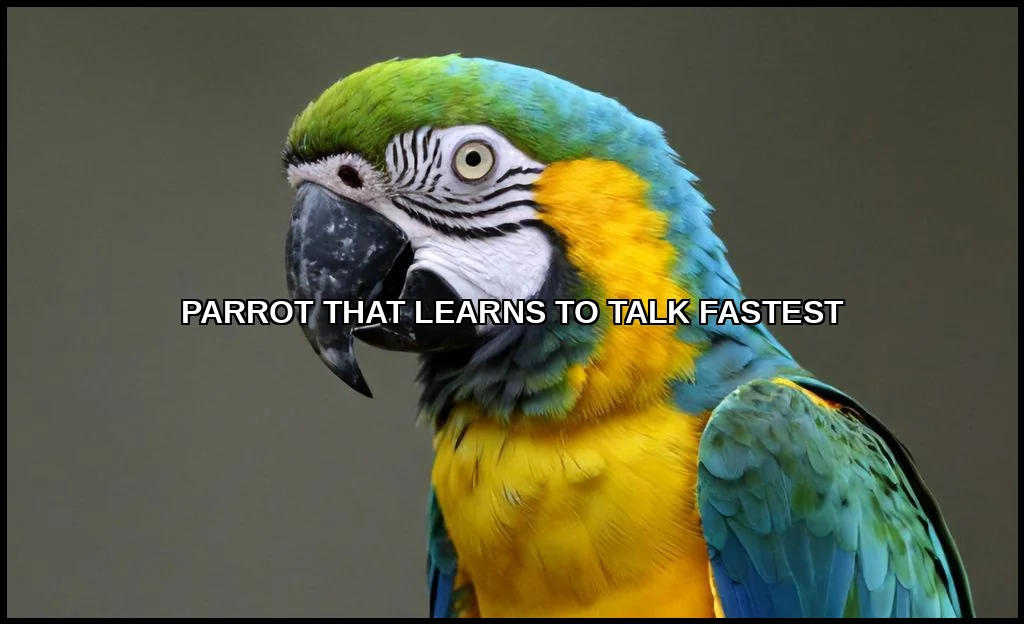
The Quest for the Fastest-Talking Parrot
Finding the fastest talking bird is more nuanced than a simple race. It’s about vocal learning capacity. This is the biological ability to hear, process, and reproduce complex sounds. Not all birds possess it. Parrots, along with hummingbirds and songbirds, are part of an elite group. Their brain structure allows for this incredible mimicry. For a deep dive into the biology, this authority guide from Audubon is fascinating.
So, which species leads the pack? We need to look at a combination of intelligence, motivation, and that all-important speech clarity. A bird that mumbles quickly isn’t the goal. You want a companion you can understand.
Top Contenders: Parrot Species Ranked by Learning Speed
Let’s break down the leading candidates. Their bird talking ability varies significantly.
1. The African Grey Parrot: The Prodigy
The African Grey Parrot is often considered the gold standard. Its intelligence ranking is off the charts, comparable to a young child. Greys don’t just mimic; they often use words contextually. They are phenomenal learners, but “fast” can be relative. A Grey might take a few months to master its first clear words, but its eventual vocabulary and comprehension can be staggering. This aligns with broader insights on which parrots excel in communication.
- Learning Speed: Methodical and precise. They may not be the absolute fastest to utter a first word, but their learning curve is steep and their retention is exceptional.
- Speech Clarity: Unmatched. Their voice is often eerily human-like.
- Best For: Experienced owners committed to lifelong mental stimulation.
2. The Budgerigar (Budgie): The Small Speedster
Don’t let their size fool you. Budgies might just be the fastest talking bird in terms of how quickly they can start to vocalize. They are incredibly social and eager to fit into their flockthat’s you. This makes them one of the easiest parrot to teach for a dedicated beginner. They hold the world record for largest bird vocabulary.
Which small parrot talks the fastest and clearest? The Budgie is a top answer. Their voice is high-pitched and can be less clear than a Grey’s, but their speed of acquisition is remarkable.
3. The Amazon Parrot: The Enthusiastic Performer
Amazon parrots, especially the Yellow-naped and Double Yellow-headed species, are brilliant talkers. They are often more outgoing and playful than the contemplative Grey. This extroversion can translate into a quicker willingness to try out sounds. They learn songs and phrases with great gusto, and their mimicry skills for tone and inflection are superb.
- Learning Speed: Fast, especially if training is engaging and fun.
- Speech Clarity: Very good, often with a bright, clear tone.
- Note: They can be loud. Their vocal learning applies to all sounds, including screams.
4. The Cockatiel: The Whistling Virtuoso
Cockatiels are often overlooked as talkers because they excel at whistling tunes. However, many males can learn to talk. Their words are often softer and more sibilant. They might not be the absolute fastest or clearest, but their sweet nature makes them a wonderful best talking parrot for beginners. Training focuses as much on whistling as on speech.
Key Factors That Influence How Fast a Parrot Learns to Talk
Speed isn’t just about species. These elements are critical.
Individual Personality & Sex
Just like people, some birds are more vocal and bold. Others are shy observers. Often, male parrots are more prolific talkers than females, though there are always exceptions. You can’t force a quiet bird to become a chatterbox.
The Right Age to Start Training
Age to start training is crucial. A young, fledged bird (around 4-6 months) is in a prime developmental window for vocal learning. Their brains are wired to pick up the sounds of their environment. Older birds can learn, but it may take more patience.
Social Environment & Bonding
A parrot that sees you as its flock is motivated to communicate. Isolation slows learning. Your bird needs to feel safe, engaged, and connected to you. This bond is the foundation of all speech training.
Proven Training Techniques to Accelerate Speech Learning
Wondering how to teach a parrot to talk effectively? Consistency is your best tool. Here are the best methods to speed up parrot speech training.
1. Start Simple and Repeat, Repeat, Repeat
Choose one short word or phrase. “Hello” or “Step up” are classics. Say it clearly and enthusiastically every time you interact. Morning and evening sessions, when your bird is most vocal, are golden opportunities.
2. Use Positive Association
Link the word with a favorite treat or head scratch. The bird begins to associate the sound with a positive outcome. This motivates them to try producing the sound themselves. Never punish for silence.
3. Leverage Audio Tools & Technology
While live interaction is best, recorded words can supplement training. Playing clear, short recordings during the day can reinforce lessons. This is where products like interactive toys or specific training recordings can fit in, much like choosing the right best travel carrier for safety and comfort.
4. Be Patient and Read the Room
Keep sessions short (5-10 minutes). Watch your bird’s body language. If they’re preening or looking away, they’re not engaged. Try again later. Forced training is counterproductive.
Training Milestones Table
| Species | Typical Time to First Word | Key Training Tip |
|---|---|---|
| Budgerigar (Budgie) | 3-6 months | Focus on high-frequency, happy interaction. |
| African Grey | 6-12 months | Incorporate words into daily routines contextually. |
| Amazon Parrot | 4-9 months | Make training a lively, playful game. |
| Cockatiel | 6-12 months (if at all) | Celebrate whistling as much as talking. |
Choosing the Right Parrot for You
So, what is the easiest parrot to teach to talk for a first-time owner? If your heart is set on a fast learner you can clearly understand, the Budgie is a stellar choice. Its small size, relatively fast learning pace, and huge potential make it a fantastic starter bird. For the dedicated novice ready for a bigger commitment, a young male Amazon offers fantastic mimicry skills and quicker engagement.
The African Grey Parrot is a lifetime commitment to an avian genius. They are not necessarily the fastest out of the gate, but they are the deepest learners. How long does it take for an African Grey to learn its first words? Several months of consistent work. But a decade later, it will still be learning, understanding, and astonishing you.
Look beyond speed. Consider lifespan, noise level, care needs, and your own lifestyle. The fastest talker in the world is a miserable companion if its needs aren’t met. Choose a parrot species that mimic not just because you want a talking machine, but because you want a relationship built on mutual communication. That’s the real magic. It’s not about the first word. It’s about the million that follow.
