
Koel Bird Appearance: How to Identify This Unique Bird
By Erick Updated 5 min read
As an Amazon Associate I earn from qualifying purchases. That costs you nothing and does not decide what gets recommended. We also earn a commission from some links to partner brands (POPOSOAP, Kiwibit Inc.).
On this page (7 sections)
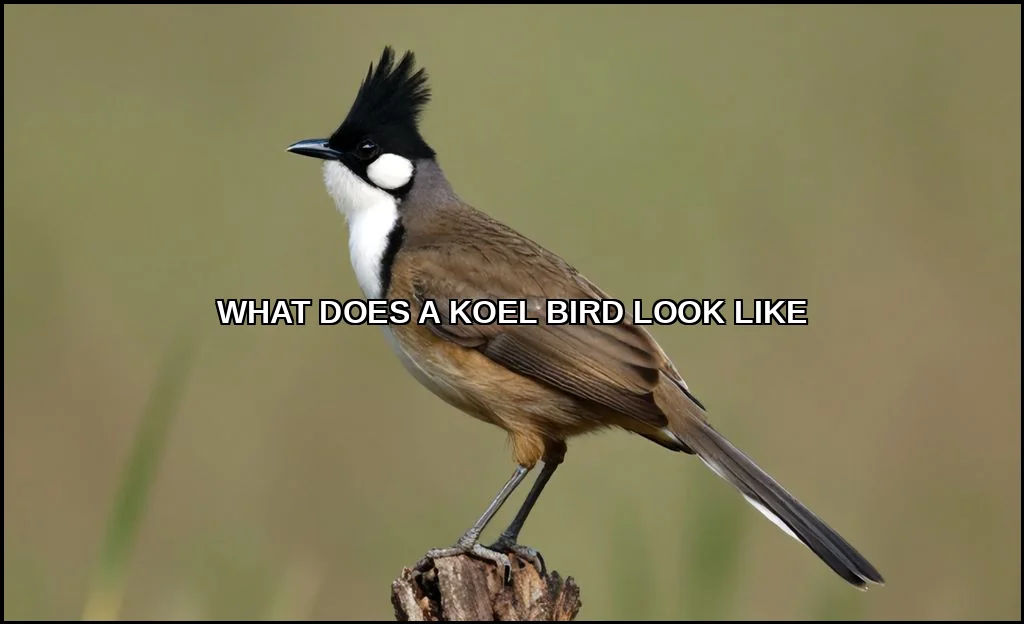
You hear a distinctive, loud call in the early morning. A persistent “ko-el, ko-el” that seems to echo. That’s your first clue a koel bird is nearby. But spotting this elusive member of the cuckoo family is a different challenge. Their appearance is a masterclass in sexual dimorphism, meaning males and females look dramatically different. For birdwatchers, knowing what does a koel bird look like is key to a positive ID.
If you’re serious about birding, a good pair of binoculars makes all the difference. For a compact, powerful option that’s perfect for treetop scanning, many enthusiasts rely on the Occer 12x25 Compact. Its clarity helps you pick out fine details like eye color and plumage texture, which is exactly how to identify a koel bird with confidence.
Introducing the Koel: A Vocal Cuckoo
The koel isn’t just one bird. It refers to several species in the genera Eudynamys and Hierococcyx. The most widespread is the Asian Koel (Eudynamys orientalis), also known as the Common or Pacific Koel. As part of the Cuculidae family, they share the infamous brood parasite strategy. They lay their eggs in the nests of other birds, like crows and magpie-larks, leaving the host parents to raise their young. This behavior influences their entire lifecycle, from their secretive nature to their wide geographic distribution across Australia, Southeast Asia, and the Indian subcontinent.
Male Koel: The Sleek Shadow
The male koel is the epitome of avian elegance. His entire plumage is a stunning, iridescent black. In bright sunlight, you might catch blue-green or purple sheens across his feathers. This isn’t a flat black, but a deep, glossy coat. The contrast is striking against his pale, lime-green bill. But his most arresting feature? His crimson eyes. They are a vivid, ruby-red that seems to glow, giving him an almost otherworldly look.
When considering koel bird size, males are large, slender birds. They typically measure 39-46 cm (15-18 inches) from beak to tail. To visualize:
| Feature | Description |
|---|---|
| Overall Color | Glossy, iridescent black |
| Eyes | Bright crimson red |
| Bill | Pale green, slightly curved |
| Size | ~42 cm long, comparable to a crow but more slender |
His call is that iconic, loud, ascending “koo-ooo” or “ko-el”. It’s a sound you’re more likely to hear than see the bird itself. Resources like the Cornell Lab’s eBird serve as an excellent authority guide for comparing regional vocalizations.
Spotting the Difference: Regional Variations
Not all male koels are identical. The Australian Koel subspecies, for instance, can appear slightly larger. Observers in northern Australia might note subtle variations in sheen or tail length compared to birds in India. This is where detailed bird watching guides and community science platforms like iNaturalist become invaluable for logging these nuances.
Female Koel: A Study in Camouflage
So, what does a female koel bird look like? She’s a complete visual departure from the male. Her plumage is designed for stealth. She is covered in dark brown feathers heavily patterned with white spots and buff streaks. This mottled appearance looks dappled, like sunlight through leaves. Her underside is typically whiter with strong dark barring.
- Primary Color: Dark brown with white/cream spots and streaks.
- Underparts: Whitish with distinct dark brown barring.
- Eyes: Often a lighter brown or hazel, not the male’s vivid red.
- Bill: Similar pale green as the male.
This camouflage is no accident. As a brood parasite, she needs to approach host nests undetected. Her spotted plumage breaks up her outline against branches and foliage. The difference between male and female koel is one of the most extreme in the bird world. It’s a classic example of how behavior drives evolution.
Juvenile Koel Identification: The In-Between Phase
Young koels are a fascinating puzzle. They don’t hatch looking like either parent. Juvenile koels often resemble the female but are duller, with less distinct spotting and more overall brownish-gray tones. Their eyes are dark. As they mature, young males will begin their molt into the glossy black adult plumage. This transition can be patchyyou might see a bird with a black head and a mottled brown body. Understanding these molt patterns helps avoid misidentification.
Habitat and Behavioral Context
You won’t find koels in open fields. They are birds of woodlands, forests, mangroves, and even well-treed suburban gardens. They spend most of their time high in the canopy, which is why that loud koel bird call is often your primary clue. They are more often heard than seen.
Their parasitic nature defines their lifecycle. The female meticulously watches host nests, like those of crows or honeyeaters. She lays a single egg that often mimics the host’s eggs in color (hence the term koel bird eggs being a topic of study). She then removes one of the host’s eggs. The host raises the koel chick, which often outcompetes its foster siblings. It’s a harsh but effective strategy.
Tools for the Modern Birder
Identifying a koel blends old-school observation with modern tools. A quality pair of binoculars is non-negotiable for noting key details like eye color and barring patterns. Beyond optics, digital resources have changed the game. You can verify a sighting against thousands of photos on eBird or consult a specialized ornithology book for deeper taxonomic details, like the split between Eurystomus orientalis and other cuckoos. It’s also wise to understand broader topics, like does avian influenza impact local populations you’re watching.
Putting It All Together: Your Identification Checklist
Next time you hear that call, run through this mental list:
- Listen: Is it the loud, repetitive “ko-el” or a more varied series of calls?
- Look Up: Scan the treetops carefully. Use a koel bird size comparisonthink “crow-sized but sleeker.”
- Color Scan: Glossy black with red eyes? That’s a male. Brown and spotted? That’s a female or juvenile.
- Context: Are you in a wooded area, suburb, or park during breeding season?
- Behavior: Is it skulking in foliage or flying swiftly between trees?
Remember, even experts sometimes struggle with quick glimpses. That’s part of the fun. The chase for a clear view of those crimson eyes or that intricately barred underside is what makes birding rewarding. And if your interest in birds extends to virtual worlds, you might even find yourself researching what to feed pixelated parrots.
The koel’s beauty lies in its contrasts. The male’s stark elegance against the female’s intricate camouflage. Its beautiful call versus its parasitic habits. By learning their appearancefrom the iridescent black of the male to the speckled disguise of the femaleyou do more than just identify a bird. You start to read the story of its survival. Grab your guide, your binoculars, and listen for that call. The treetops are hiding a masterpiece of adaptation.