Why Do Birds Sit on Their Eggs? The Key Reasons
Contents
You see a bird sitting quietly in its nest, day after day. It looks peaceful, maybe even a bit lazy. But that stillness is a powerhouse of biological activity. The simple act of a bird sitting on its eggs is the critical engine of avian reproduction, a process we call incubation.
It’s not just about keeping eggs cozy. It’s a finely tuned dance of temperature, timing, and physiology. Without this dedicated brooding, the complex life inside the egg simply cannot begin. For bird enthusiasts trying to replicate these conditions, like when raising domestic fowl, technology offers a hand. For this project, many professionals recommend using the Intelligent Brooder Box which provides precise warmth and safety for developing chicks.
The Biological Purpose of Incubation
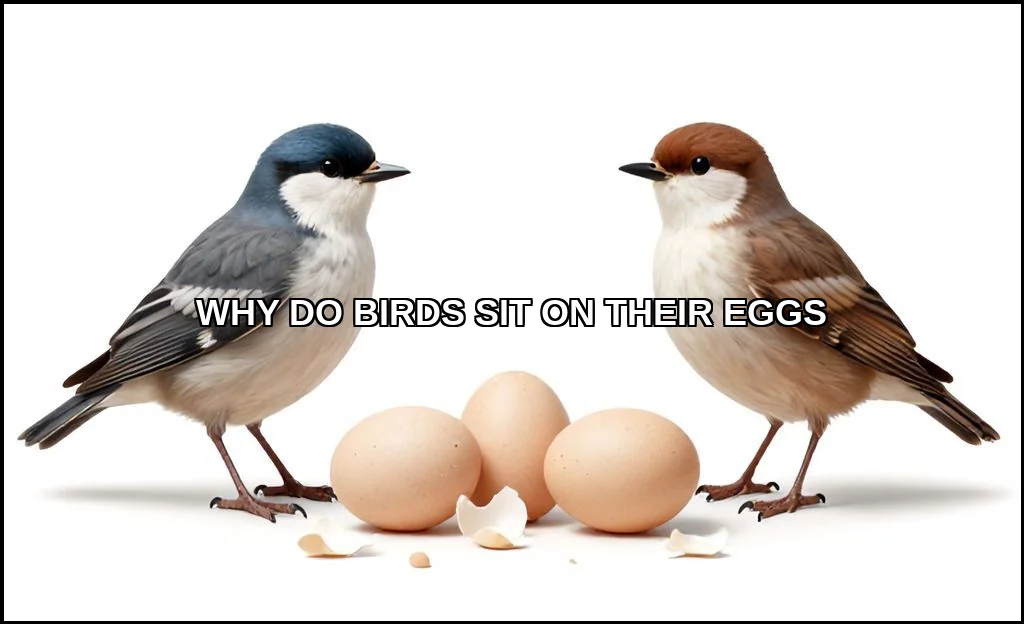
At its core, incubation is about one thing: enabling embryo development. A freshly laid egg contains all the raw materialsthe yolk for energy, the albumen (egg white) for protection and hydration, and the genetic blueprint. But it’s essentially paused. The embryo needs a specific, steady external heat source to kickstart and sustain its metabolic processes.
This warmth transforms the inert contents. Cells divide. Organs form. The tiny being grows, entirely dependent on the environment the parent bird creates. The brooding behavior is triggered by powerful hormonal shifts. In many species, the hormone prolactin surges, driving the intense desire to sit on the nest. This comes at a significant physiological cost to the parenta missing entity in many basic explanations. The bird is expending energy to generate heat while often fasting or foraging less, a testament to the investment in the next generation.
How Egg Development Requires Warmth
Think of the egg as a life-support capsule. Its development is exquisitely temperature-sensitive. Most songbirds require the eggs to be maintained at a steady 99.5F to 102F (37.5C to 39C). Even a few degrees off can slow development or be fatal.
The parent bird acts as a living incubator. They don’t just “sit” on the eggs; they make constant micro-adjustments. They use a highly vascularized patch of skin on their belly called a brood patch. This area, often featherless, swells with blood vessels to efficiently transfer body heat directly to the eggs. The parent ensures even heating by regularly rotating the eggs with their beak or feet.
- Cloacal Contact: During incubation, the brood patch is in direct contact with the eggs. This intimate transfer is far more efficient than simply having warm air around the nest.
- Temperature Consistency: Fluctuations are the enemy. Consistent warmth ensures the complex biochemical reactions of development proceed in the correct sequence.
- Humidity Control: The parent’s body also helps regulate moisture loss through the porous eggshell, preventing the embryo from drying out.
Parental Roles: Who Sits on the Eggs?
This is where bird behavior gets fascinatingly diverse. The answer to “do male birds sit on eggs” is a resounding “it depends on the species.” Parental roles in avian incubation are not uniform.
In many songbirds, like robins, the female does almost all the sitting on eggs. The male’s role is often to guard the territory and bring food to his mate. In other species, like penguins, the duty is shared equally in long, grueling shifts. Some shorebirds have males that take the primary incubation role. And then there are the exceptions, like the cuckoos, which practice brood parasitism, leaving the brooding eggs entirely to other species.
The division of labor is often linked to physiology (only females develop a brood patch in some species) and evolutionary strategy. Understanding these differences is a key part of using bird watching guides effectively, as behavior clues you into species identification.
The Brooding Process and Timeline
So, how long do birds sit on their eggs? The incubation period varies dramatically. A tiny hummingbird might hatch in 12-14 days, while a large albatross may incubate for 80 days. This timeline is genetically programmed and correlates with the chick’s development strategy at hatching.
This leads us to another missing entity: the difference between altricial and precocial species. Altricial chicks (like songbirds) hatch naked, blind, and utterly helpless. They require a short, intense incubation period. Precocial chicks (like ducks or chickens) hatch covered in down, eyes open, and ready to move. Their incubation inside the egg is longer, allowing for more advanced development.
The process isn’t continuous from laying to hatching. Most birds won’t start full, constant incubation until the last egg is laid. This ensures all chicks hatch around the same time, preventing older siblings from outcompeting younger ones. Once begun, the parent takes only brief breaks for essential needs.
| Bird Type | Typical Incubation Period | Primary Brooding Parent |
|---|---|---|
| American Robin | 12-14 days | Female |
| Mallard Duck | 26-30 days | Female |
| Emperor Penguin | 64-67 days | Shared (male primary shift) |
| Chicken (Domestic) | 21 days | Female (or artificial incubator) |
What Happens if Eggs Are Left Unattended?
This gets to the heart of why do mother birds sit on eggs with such dedication. The stakes are high. If eggs are left unattended for too long, especially in cool climates, development stalls. The embryo may die. Predators may find the unprotected clutch. Temperature is non-negotiable.
Even short absences carry risk. This is why providing safe nesting boxes can be so beneficial for backyard birdsit reduces the energy they spend on vigilance and allows them to focus on brooding. The question of what happens if birds don’t sit on eggs has a simple, stark answer: reproductive failure.
The hatching process itself is the grand finale. The fully developed chick uses a special temporary structure on its beak called an egg tooth to pip, or break, the shell from the inside. This arduous work can take hours. The parent may hear the chick peeping inside and may even stop incubating to encourage the hatch, another nuanced behavior.
The Bigger Picture in Bird Reproduction
Bird reproduction is a cycle of immense investment. Nesting birds select sites, gather materials, lay eggs, and then commit to the marathon of incubation. The energy toll is immense. It’s a vulnerable time, which is why disturbance by humans or pets can have catastrophic consequences.
For the most detailed and scientifically accurate information on specific species’ habits, an authority guide like the one from the Cornell Lab of Ornithology is an invaluable resource. Their work, along with organizations like Audubon, helps us understand these complexities.
From the hormonal trigger of prolactin to the physical creation of the brood patch, every element is optimized for one outcome. That bird sitting so still is conducting a symphony of life. It’s managing egg temperature, humidity, rotation, and protectiona masterclass in parental care honed over millions of years. Next time you see it, you’ll know: that’s not idleness. That’s everything.