
Taking your large parrot on a trip isn’t like grabbing your keys and a water bottle. It requires serious planning. The wrong carrier can lead to a dangerous, stressful experience for your feathered friend. A specialized avian travel carrier is non-negotiable for safety and comfort.
Think of it as a mobile fortress. For a quick vet visit or a cross-country move, the cage must be secure, ventilated, and appropriately sized. Many owners make the mistake of using a standard cage, which can be hazardous during car rides or airline travel. Investing in the right portable bird enclosure is the first step to a smooth journey. For smaller trips or as a supplementary option, the halinfer Bird Carry offers a lightweight, soft-sided design that’s worth considering for calm birds on short excursions.
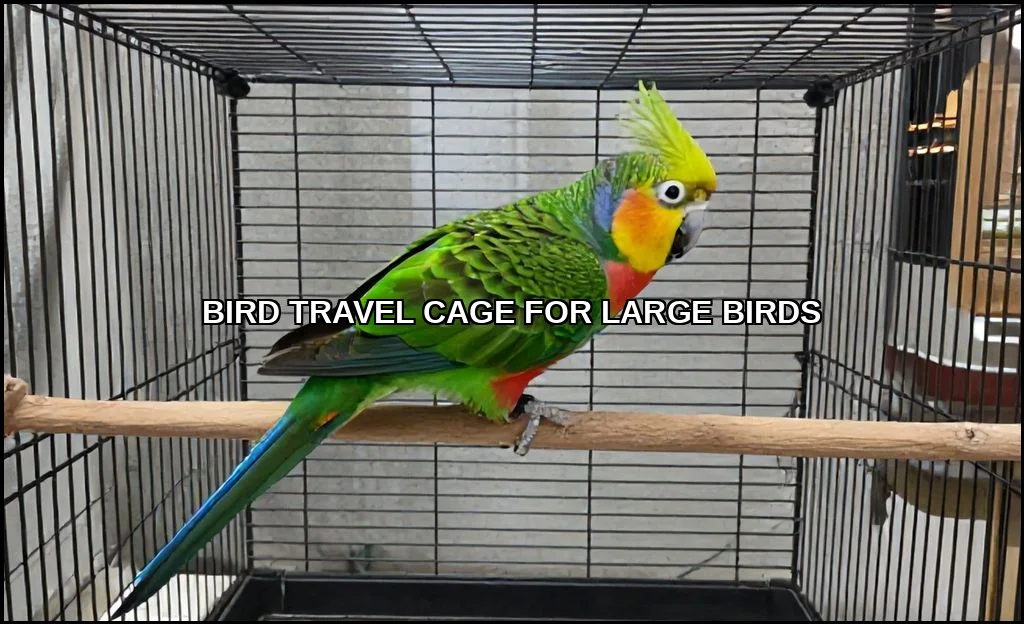
What Makes a Great Travel Cage for Large Birds?
Not all carriers are created equal. A travel cage for a macaw has different demands than one for a cockatoo, though both need exceptional strength. You’re looking for a balance of security, convenience, and bird-friendly design.
Non-Negotiable Safety & Durability Features
The hardware is everything. Flimsy latches or thin wire spell disaster for a powerful beak.
- Heavy-duty construction: The frame and bars must withstand chewing and panic. Powder-coated wrought iron or stainless steel are top choices.
- Secure locking mechanisms: Look for barrel-bolt locks or industrial-grade clasps that a clever parrot can’t manipulate. Some models add a padlock loop for extra security.
- Proper ventilation: Ample airflow is critical to prevent overheating. Vents should be covered with a strong, small-gauge mesh that toes can’t get caught in.
Remember, a stressed bird will test every weakness. A carrier that fails is more than an inconvenience; it’s a genuine escape risk. This is why familiarization training before travel is so vitala missing entity many guides overlook.
Travel-Specific Design Essentials
Beyond being strong, the cage must function in motion. It’s a dynamic environment.
- Airline compliant: If you plan to fly, check specific airline dimensions. Most require a bird crate for car travel that can also fit under the seat. Hard-sided plastic carriers are often mandated.
- Easy to clean: Accidents happen. A removable plastic tray or a smooth, non-porous interior makes sanitation quick, which is crucial for health.
- Stable Base: A wide, flat bottom prevents tipping in the car. Some have integrated seatbelt straps.
- Multiple Access Points: Top and front doors make placing a nervous bird easier and allow for different perch arrangements.
Brands like King’s Cages and Prevue Hendryx are known for these features in their wire models. For a truly collapsible travel cage, look at soft-sided options with rigid frames, though they suit calmer species best.
Matching the Cage to Your Bird’s Size & Species
Large bird covers a lot of ground. An Amazon parrot and a Hyacinth Macaw have vastly different space needs. A cramped bird is an anxious, potentially aggressive bird.
Top Cage Recommendations by Type
Heres a breakdown of the main product categories and who they suit best.
| Bird Type (Examples) | Recommended Cage Style | Key Features to Prioritize |
|---|---|---|
| Macaws, Large Cockatoos | Heavy-Duty Wire Carrier or Hard-Sided Crate | Extremely thick gauge bars, industrial locks, maximum ventilation. |
| African Greys, Amazons, Eclectus | Sturdy Wire Carrier or Hard-Sided | Bar spacing no wider than 1 inch, multiple perch options, secure doors. |
| For Vet Visits / Short Trips | Collapsible Soft-Sided or Compact Hard Carrier | Lightweight, easy to store, often includes a shoulder strap. |
Finding the best travel cage for macaws and cockatoos means prioritizing unyielding strength. For an airline approved carrier for African grey, focus on precise dimensions and a quiet, dark interior to reduce stress. Always check resources like the official source from the AVMA for the latest travel guidelines.
Getting Your Bird Ready: Travel Safety & Acclimation
Buying the perfect large bird carrier is only half the battle. The other half is preparing your parrot. Travel stress reduction techniques are a critical missing piece in many discussions.
The Familiarization Training Protocol
Never make the carrier’s first use the day of the trip. That’s asking for a terrified bird.
- Week 1: Place the open carrier in your bird’s play area. Let them explore it as a fun, new object. You can even decorate it lightly to make it inviting.
- Week 2: Place favorite treats and toys inside. Let meals be eaten in the carrier. The goal is to build positive associations.
- Week 3: Practice closing the door for short periods while you’re in the room. Gradually increase the time.
- Week 4: Take short, 5-minute drives around the block. Keep the experience calm and reward heavily afterward.
This gradual process makes the carrier a safe space, not a scary box. It’s the single best thing you can do for travel day.
Travel Day Checklist & Tips
When the big day arrives, a checklist keeps you calm. A calm owner means a calmer bird.
- Secure the Carrier: In the car, use a seatbelt or place it on the floor in the footwell. Never on the passenger seat with an airbag.
- Climate Control: Avoid direct sun and drafts. Birds are very sensitive to temperature shifts.
- Minimal Perches: Use one low, sturdy perch to prevent falls during bumps. A travel cage with perch that bolts in is ideal.
- Familiar Items: A familiar toy or a piece of your worn t-shirt can provide comfort.
- Know the Policies: For air travel, research specific airline policy resources (Delta, United, etc.) well in advance. Requirements change.
Health is paramount when traveling. Always consider how diseases does spread in confined spaces, which underscores the need for a clean, well-ventilated carrier.
Your Questions on Bird Travel, Answered
What is the best portable cage for taking a bird to the vet?
For most large parrots, a small, sturdy hard-sided carrier is best. It’s easy to sanitize, provides a sense of security, and is easy to carry. Soft-sided collapsible carriers work for very calm birds on very short trips.
How do I choose a travel cage for a large parrot?
Start with your bird’s beak strength and travel frequency. Measure your bird’s full wingspan; the cage should allow them to turn around and perch without tail feathers touching the sides. Then, prioritize secure bird transport features: locks, bar gauge, and ventilation over fancy extras.
Can I use a regular cage for travel?
It’s not recommended. Most home cages are too large, unstable, and have parts that can break or collapse in a sudden stop. A dedicated flight cage for travel is designed for the unique stresses of motion.
The right travel cage is a peace-of-mind purchase. It’s not just a container; it’s a mobile safe house for your companion. By focusing on heavy-duty construction and species-specific fit, then pairing it with thoughtful acclimation, you transform travel from an ordeal into a manageable, even calm, experience. Your bird trusts you for its safety. A proper carrier is how you honor that trust, mile after mile.
