
You look at your parrot and hear it say “hello.” It’s a delightful trick. But have you ever wondered how that sound is physically produced? The biological reality is far more complex and fascinating than simple mimicry. It involves a unique vocal organ, specialized brain circuits, and a sophisticated learning process that rivals our own.
This isn’t just about repeating sounds. It’s about the intricate biology of vocal learning. To truly understand your parrot, you need to peek under the feathers. We’ll explore the physical instrument, the neural computer running the software, and the evolutionary reasons this ability exists. For anyone training a parrot, tools like the Getting Started Clicker can be incredibly helpful for marking desired behaviors clearly during this complex learning process.
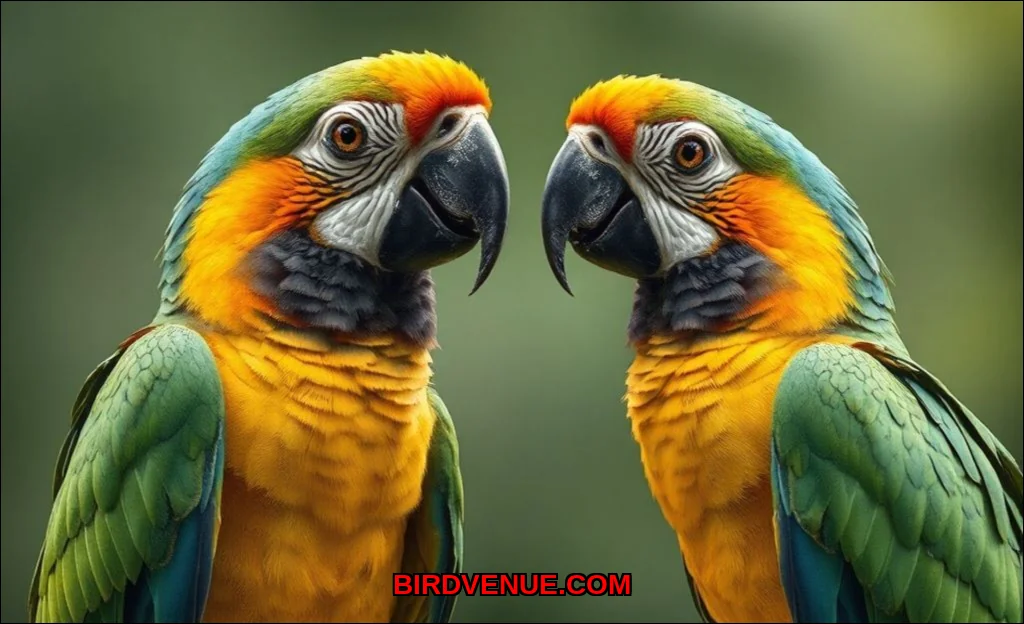
The Syrinx: A Parrot’s Vocal Instrument
Parrots don’t have vocal cords like you do. Instead, they possess a remarkable organ called the syrinx, located at the base of their trachea where it splits into the two bronchi. This placement is key. Think of it as a dual-chambered instrument. The syrinx has independent sets of muscles and membranes on each side, allowing for incredible control.
Your parrot can produce two different sounds simultaneously. It can create harmony, complex frequency modulations, and even mimic environmental noises with startling accuracy. The biological basis of parrot speech starts right here. By precisely controlling airflow and tension in these membranes, parrots generate the raw sounds that their brains will later shape into words, whistles, and household noises.
- Precision Engineering: The syrinx has more musculature than the vocal organs of most other birds, granting finer control.
- Dual Channels: Independent operation of left and right sides enables sound layering.
- No Lips or Teeth: All articulation happens in the throat and mouth, making their mimicry even more impressive.
How This Differs From Human Speech
You use your larynx, vocal cords, tongue, lips, and teeth to form speech. A parrot’s toolkit is different but no less effective. They use the syrinx for sound generation and their tongue (which is thick and muscular) to shape the sound within a short, broad oral cavity. The parrot talking mechanism is a brilliant workaround using entirely different biological hardware to achieve a similar auditory result.
Brain Power: The Neural Circuitry Behind Mimicry
The syrinx is just the speaker. The real magic is in the computerthe brain. Parrots possess specialized neural pathways dedicated to vocal learning, a trait shared with only a few other animals like songbirds, hummingbirds, and humans. This is where the concept of bird brain speech gets turned on its head. Their brains are specifically wired for this task.
Key regions like the HVC (used as a proper name) and the RA (robust nucleus of the arcopallium) form the core of this system. These forebrain nuclei are part of the avian “song system,” a network that controls song learning and production. In parrots, this system is exceptionally developed and includes additional “shell” structures not found in songbirds, which may relate to their superior mimicry skills.
From Sound to Memory to Motor Command
When you speak, your parrot hears it. That auditory information travels to specific brain regions for processing and storage. Later, when the parrot decides to “talk,” these stored memories are accessed. The brain then sends precise motor commands down the neural highway to the muscles of the syrinx and tongue. This entire loophearing, memorizing, reproducingis the essence of vocal learning. You can learn more about the fascinating interplay between hearing and reproduction in our detailed guide on how parrots learn to talk.
From Hearing to Repeating: The Learning Process
So, how does a parrot’s brain process human speech? It starts with social bonding. Parrots are not mindless tape recorders. They are social learners. A young parrot in the wild learns vocalizations from its flock to identify itself and fit in. In your home, you become the flock.
- Attention and Social Context: Your parrot is most likely to mimic sounds from individuals it’s bonded to. Emotional connection matters. This is a critical missing entity many explanations overlook.
- Auditory Template Formation: The brain creates a memory of the sound pattern. This is the “goal” it will try to match.
- Sensorimotor Practice: The parrot practices, listening to its own output and adjusting the syrinx muscles to better match the template. Babbling and muttering are part of this phase.
- Crystallization: The motor pattern becomes stable and automatic. The word or sound is now reliably reproduced.
This is why repetition and positive reinforcement are so effective. You’re engaging with a biologically driven, social learning process. The complexity of this mimicry biology underscores their remarkable intelligence.
Evolutionary Advantages of Vocal Mimicry
This ability didn’t evolve for our amusement. In the wild, vocal flexibility offers serious survival benefits. For a highly social, intelligent, and long-lived creature like a parrot, communication is everything.
| Evolutionary Driver | Practical Benefit |
|---|---|
| Flock Integration | Learning unique flock calls strengthens social bonds and coordinates group movement. |
| Mate Attraction | Demonstrating vocal prowess and learning ability signals fitness and intelligence to potential partners. |
| Environmental Adaptation | Mimicking other species’ alarm calls can provide a survival advantage, warning of predators. |
| Individual Recognition | Complex, learned contact calls help individuals identify each other within large, noisy flocks. |
This vocal adaptability allowed them to thrive in complex social environments. When brought into a human home, that powerful instinct simply redirects toward the new “flock.” You can see how this deep-seated instinct plays out, sometimes problematically, in discussions about managing wild parrot populations.
Why Parrots Excel Compared to Other Birds
You might ask: why can parrots talk but other birds can’t? Many birds have a syrinx. Songbirds like canaries are talented vocal learners. But parrots, along with corvids (crows, ravens), sit at the pinnacle of avian parrot intelligence and vocal mimicry. Several biological differences set them apart.
- Enhanced Brain Circuitry: As mentioned, their forebrain song system has more complex subdivisions, potentially allowing for greater vocal control and learning capacity.
- Long Lifespan and Extended Youth: Many parrots live for decades and have long juvenile periods. This allows more time for complex social learning and practice.
- Advanced Cognitive Abilities: Their problem-solving skills, tool use (in some species), and social intelligence suggest a general cognitive platform that supports complex vocal learning. It’s not an isolated trick; it’s part of a larger intelligent package.
The biological differences between parrot and human speech are vast, but the outcomecomplex, learned vocal communicationis strikingly similar. It’s a spectacular example of convergent evolution, where different species develop similar traits to solve similar social challenges. For a deeper dive into the evolutionary “why,” the external resource Why Do Parrots Talk on Britannica offers excellent scientific context.
Your parrot’s ability to say your name isn’t a party trick. It’s the result of millions of years of evolution fine-tuning a unique vocal instrument, a specialized brain, and a social learning strategy. You’re not just hearing a repeated sound. You’re witnessing a demonstration of remarkable biological engineering and cognitive complexity. When you encourage this ability, you’re engaging with one of the animal kingdom’s most sophisticated forms of avian communication. Understand the biology, and you’ll appreciate every “hello” on a whole new level.
