How to Build a Large Indoor Birdcage: Expert Guide
Contents
You bought a cage from the pet store, and within a month you realized it was too small. Your bird has barely enough room to stretch its wings, let alone fly a few flaps. That little $80 box is now a jail, not a home. The solution? Build your own large indoor birdcage. This guide walks you through the exact dimensions, materials, and safety checks that most store-bought cages get wrong. By the time you finish reading, you’ll know how to design a cage that actually gives your bird a decent quality of life.
But here’s something most people overlook: the inside of a large birdcage can look bare unless you add some visual structure. That’s where a tall artificial plant like the HZXGCP Bird of Paradise Plant Artificial 6ft comes in handy. It gives your bird a natural-looking perch area without the risk of toxic sap or constant watering. The silk leaves are waterproof and the cement-weighted pot prevents tipping. Drop one into the corner of your cage setup, and the space instantly feels more like a branch canopy and less like a metal box.

HZXGCP
Bird of Paradise Plant Artificial 6ft,Faux Plants…
- 【Lifelike Appearance】Meticulously crafted to mimic the real Bird of Paradise, our artificial plant brings the lushness of nature t…
- 【Easy to Assemble】This pre-assembled Bird of Paradise plant is easy to assemble; simply arrange different-sized leaves according t…
- 【High-Quality and Sturdy】This artificial tree is made of durable high-quality silk material that feels realistic, is waterproof, a…
The Biggest Myth About Birdcage Size
Most people think a tall, narrow cage is fine because birds like to climb. They do, but climbing isn’t flying. A standard 18×18 inch footprint might work for a finch for a few hours, but it’s cruel for a parakeet or cockatiel. Birds need horizontal flight space to stretch their pectoral muscles. The minimum width for a single small parrot (like a budgie or lovebird) is 24 inches. For a medium parrot (conure size), bump that to 36 inches. Anything narrower forces your bird to hop or climb everywhere, which leads to muscle atrophy and boredom.
Height matters too, but not as much as width. A cage that’s 48 inches tall and only 18 inches deep is still a bad cage. Aim for a width that’s at least 1.5 times your bird’s wingspan. For a sun conure with a 12-inch wingspan, that’s 18 inches minimum. But bigger is always better. I’d never build anything under 30 inches wide for any bird larger than a canary.
Another Myth: “Any Wood Will Work”
Wood looks nice and feels natural. But lots of common lumber is toxic to birds. Cedar and redwood contain phenols that cause respiratory damage. Pressure-treated wood is soaked in copper and arsenic compounds. Even pine can be okay if kiln-dried, but the sap and oils can irritate sensitive birds. Stick to hardwoods like oak, maple, or beech. Birch is also safe if unfinished. Or skip wood altogether for the frame and use powder-coated steel. It’s heavier, but it lasts forever and won’t harbor bacteria in the grain.
Another material trap: galvanized wire mesh. Yes, it’s cheap and easy to find. But if the zinc coating flakes off or your bird chews on it, zinc poisoning is real. Worse, many galvanized wires are welded after galvanizing, which creates exposed raw steel edges that rust and shed heavy metals. Always demand stainless steel mesh (304 or 316 grade) or powder-coated wire with no exposed metal. It costs more up front, but you won’t replace it in two years.
Materials and Layout: What Actually Works
Let’s talk specifics. For a large indoor birdcage (say 48” wide x 30” deep x 60” tall), you have three main frame options. Here’s how they compare:
| Frame Material | Weight | Corrosion Resistance | Cost | Ease of Modification |
|---|---|---|---|---|
| Powder-coated steel | Heavy (30–50 lbs) | Excellent | $$$ | Hard (needs drill, angle grinder) |
| Stainless steel | Heavy (40–60 lbs) | Best | $$$$ | Hard |
| PVC pipe (Schedule 40) | Light (10–20 lbs) | Good | $ | Easy (cut with saw, cement joints) |
| Hardwood frame + wire panels | Moderate (20–35 lbs) | Fair (needs sealant) | $$ | Moderate |
For most indoor builds, I recommend powder-coated steel or PVC frame with stainless mesh. PVC is lighter and easier for a first build, but it won’t hold heavy perches without extra bracing. On the other hand, wood frames need a non-toxic sealant (clear water-based polyurethane works) and constant checking for splinters or chew damage. Choose based on your skill level and your bird’s chewing habits. A macaw will destroy PVC in a week. A canary can live in a PVC palace for years.
Key Design Rules
- Bar spacing: no more than ½ inch for small birds, ¾ inch for medium parrots, 1 inch for large parrots. A conure can squeeze through a ¾-inch gap.
- Door size: make it big enough to reach inside and grab a perch or a water dish without contorting. A double-door design (main door plus feeder door) is worth the extra work. Check out a good birdcage door design for measurements.
- Drop tray: use a removable tray lined with newspaper or cage liner. Don’t use a false bottom that’s hard to scrub. Your future self will thank you.
- Perch placement: position perches so they don’t sit directly above food bowls (poop issue). Leave at least 8 inches of clear airspace for short flights.
Finishing Touches That Make a Difference
Once the frame is assembled and the mesh is tensioned, the real work begins. Most people stop too early. A bare wire cage is depressing. Add at least three natural wood perches at varying heights, and one concrete perch for nail trimming. Hang a couple of stainless steel bowls on the sides — never place them on the floor. Birds will foul their food in hours.
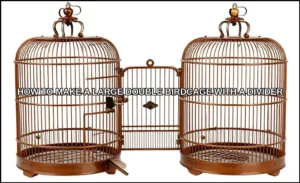
Consider adding a corner platform for resting or for a food dish. Small details like a removable play top or a seed skirt (a thin plastic lip around the base) cut down on mess. And if you plan to keep multiple birds, build a divider that slides in or out — check our large indoor birdcage article for divider ideas.
One more thing: safety checks. Run your hand over every edge. Any sharp spot will draw blood. Sand or file it down. Open and close the door twenty times. A latch that sticks at 3 AM when your bird escapes is a disaster. Test the whole cage with your bird inside for an hour while you watch. Adjust perches, move bowls, watch for signs of stress or trapped wings.
Frequently Asked Questions
Can I use chicken wire for a birdcage?
No. Chicken wire is too soft and has sharp cut ends. Birds can chew through it or get their heads stuck. The hexagonal openings also catch claws. Use welded wire mesh (square or rectangular) with proper bar spacing.
How do I clean a large indoor birdcage without moving it?
Build it with a removable tray and a front door large enough to reach every corner. Use a shop vac with a brush attachment for dry debris, then wipe with a bird-safe cleaner (vinegar and water works). For detailed advice on cleaning with the bird still inside, see cleaning routines.
What’s the safest paint for a birdcage?
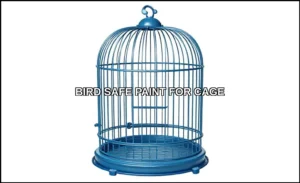
No paint is safer than a non-toxic powder coating applied professionally. If you must paint, use a water-based, zero-VOC enamel and let it cure for at least two weeks in a ventilated space before the bird goes near it. Rustoleum’s low-VOC spray paints are popular, but cure time is everything.
Should I build a cage with a divider for two birds?
Only if you need temporary separation (introducing new birds, recovering from injury). Permanent dividers stress birds that want to flock. If you want two birds, build one large cage with enough space for both to retreat if needed. A double cage with a removable partition gives you flexibility. Our guide on dividers covers the options.
How often do I need to replace the mesh?
If you use stainless steel (304 or 316), the mesh will outlast the frame. Powder-coated steel starts showing rust in 3–5 years if you live in a humid area. PVC coating eventually peels. Inspect every six months for corrosion, especially around screw holes where moisture collects.
What to Do Right Now
This isn’t a project you finish in a weekend unless you have the materials pre-cut. But you can make progress today.
- Measure your bird’s wingspan and the space where the cage will sit. Write down the minimum dimensions.
- Choose your frame material based on the table above. If you’re new, start with PVC or wood.
- Order stainless steel mesh (304 grade, 16-gauge) in the right bar spacing—don’t cut corners.
- Design the door opening size and latch mechanism before you cut any frame pieces.
- Buy a removable drop tray that fits snug under the frame — a plastic boot tray from the hardware store works.
- Plan perch and bowl placements on paper. Tape temporary string lines inside the empty cage to visualize.
- Set a budget double what you expect. The mesh alone will cost more than you think, and that’s fine.
Building your own cage gives you total control over safety, size, and layout. No more compromises. No more feeling guilty every time you see your bird pacing the same three-inch perch. Start with the planning, and the rest comes together.