13 Proven Ways to Keep Birds Off Your Porch (And Stop Nesting)
Contents
You sweep the porch on Tuesday. By Thursday, there is a fresh pile of twigs in the corner of the beam, a few droppings on the railing, and that familiar chirping sound coming from above the light fixture. Birds pick porches because they offer shelter from predators and weather. Your ceiling beam is basically a penthouse suite for a swallow.
This guide ranks 13 deterrents by real-world effectiveness, cost, and effort. You will learn which species you are dealing with, what actually scares them off, and what you can legally remove. You will also get a seasonal calendar so you are not playing whack-a-mole all year. The goal is a porch you can use without a hazmat suit.
OFFO
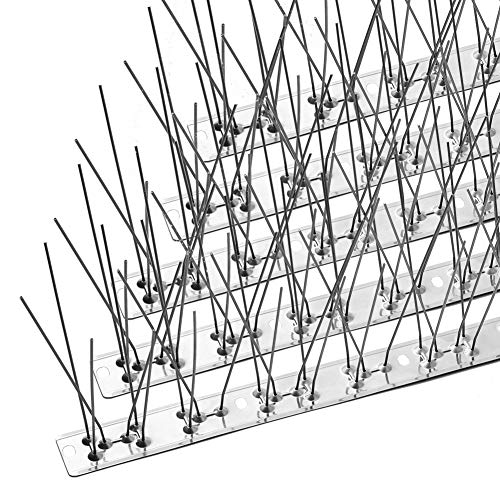
OFFO Bird Spikes, 304 Stainless Steel, 9…
- Efficient and Humane Bird Spikes: The stainless steel bird spikes imitate the structure of thorn plants and have bright surfaces t…
- Durable: Made of high-quality 304 stainless steel, strong and durable. Compared with plastic bases, our bird spikes are more durab…
- Full Width Coverage: The length of each spike is 100mm (4 inches) and the width is 76mm (3 inches). Unlike products with only 2 or…
Before we get into the list, one product solves the most common problem instantly. The PANGCH stainless steel bird spikes cover 4.1 feet across five strips. They block pigeons and larger birds from landing on flat beams and ledges. The 304-grade steel bends around corners and cuts to size, so you are not stuck with a one-size-fits-all strip.
Why Birds See Your Porch as Prime Real Estate
Birds look for three things: a flat surface, overhead cover, and proximity to food. Your porch offers all three. The beam under the roof keeps rain off. The corner joint gives a stable base for a nest. If you have a bird feeder within 20 feet, you are rolling out the welcome mat.
Different species have different preferences. Swallows build mud cups on vertical walls under eaves. Sparrows stuff grass into any gap or crevice. Pigeons prefer wide, flat ledges. Knowing which bird you have changes which deterrent works. A fake owl might scare a sparrow for a day, but a pigeon will ignore it after a week.
The nesting season runs from early spring through late summer in most of North America. That is six months of droppings, noise, and potential health risks. The droppings carry bacteria and fungi that can cause respiratory issues. You are not being paranoid for wanting them gone.
The 13 Proven Deterrents (Ranked by Effectiveness)
These are ranked by how well they work in real conditions, not by how nice they look. The first three are permanent fixes. The middle ones are temporary. The last ones depend on your situation.
Physical Barriers (Netting, Spikes, Wire Mesh)
- Bird spikes – The most reliable option for ledges and beams. The PANGCH spikes create an uneven surface that makes landing impossible. Install them on any flat edge wider than half an inch. They cost less than a professional visit and last for years. One trade-off: they look industrial, so you may want them only on the back porch.
- Bird netting – Best for large open areas like a covered porch ceiling. The net hangs vertically or horizontally to block access entirely. Use 3/4-inch mesh to stop sparrows and swallows. It is invisible from the ground but requires anchors every few feet. Installation takes an afternoon and a ladder.
- Wire mesh or hardware cloth – This works for gaps and vents. If birds are entering through a soffit gap or a broken louver, staple 1/2-inch mesh over the opening. It is cheap and permanent. The downside is that it traps debris and needs occasional cleaning.
Visual Scare Tactics (Reflective Objects, Decoys)
- Reflective tape or Mylar strips – Hang them where they catch sunlight and move in the wind. The flashing light disorients birds. This works well for a few weeks, then birds habituate. Move the tape every two weeks to keep it effective. It costs almost nothing.
- Predator decoys (fake owls, hawks) – A plastic owl with a rotating head works for about a month. Birds learn it is not moving. You can extend its life by moving it every few days and pairing it with a sound device. Some people report that pigeons eventually perch on the owl’s head. Your mileage will vary.
- Wind chimes or aluminum pans – The noise and movement deter some birds. They work best on open porches with a breeze. On a still day, they are useless. They also make noise, which may annoy you more than the birds.
Sensory Deterrents (Gels, Sprays, Ultrasonic)
- Bird gel or sticky repellent – A clear gel that feels sticky underfoot. Birds dislike the texture and leave. It works on narrow ledges and window sills. The gel collects dust and looks grimy after a few months. Reapply twice a year.
- Peppermint oil or citrus sprays – Birds have a strong sense of smell. Concentrated peppermint oil mixed with water deters them temporarily. Rain washes it away, so reapply weekly. This is a low-effort option but not a permanent fix.
- Ultrasonic devices – These emit high-frequency sounds humans cannot hear. The evidence is mixed. Some units work on specific species, but many birds ignore them entirely. You are better off spending money on physical barriers first.
Habitat Modification (Trimming, Cleaning, Feeder Placement)
- Trim trees and shrubs near the porch – Overhanging branches give birds a launching pad. Cut back anything within 10 feet of the roofline. This removes the easy access route.
- Move bird feeders – If you feed birds, place the feeder at least 30 feet from the porch. This draws them away from your entryway. Stop feeding entirely during nesting season if the problem is severe.
- Install a motion-activated sprinkler – This works on ground-level porches. The sudden burst of water startles birds and teaches them to avoid the area. It uses more water than you might like, and you will get sprayed yourself if you forget to disable it.
- Seal all entry points – Check for gaps under eaves, loose siding, and open vents. Use caulk or steel wool to close anything larger than a quarter inch. This is the only permanent solution for cavity-nesting birds like sparrows.
How to Identify the Bird Species on Your Porch
You need to know your enemy. Here is a quick field guide.
- Pigeons – Gray bodies, iridescent necks, and a cooing call. They nest on flat ledges and beams. Droppings are large and acidic.
- Sparrows – Small, brown, and chirpy. They build messy grass nests in corners, vents, and gutters. They are aggressive and will fight other birds for a spot.
- Swallows – Sleek bodies with forked tails. They build mud cup nests on vertical walls under eaves. They eat insects, so you may not want to harm them.
- Starlings – Black with speckled feathers. They are invasive and nest in any hole they can find. They are loud and produce a lot of waste.
Watch the bird for five minutes. Note the nest shape and location. A mud cup means swallow. A grass ball in a corner means sparrow. This tells you whether you need spikes (pigeons), netting (swallows), or sealing gaps (sparrows).
The Cost Breakdown: DIY vs. Professional Solutions
Here is what you will actually pay. DIY costs are for materials only. Professional costs include labor, which varies by region.
| Method | DIY Cost | Professional Cost | Lifespan | Effort |
|---|---|---|---|---|
| Bird spikes (5 strips) | $20 – $40 | $150 – $300 | 5+ years | Low |
| Bird netting (100 sq ft) | $50 – $100 | $400 – $800 | 3-5 years | Medium |
| Reflective tape | $10 – $20 | N/A | 1 season | Very Low |
| Fake owl decoy | $15 – $30 | N/A | 1-2 months | Very Low |
| Motion-activated sprinkler | $40 – $80 | N/A | 2-3 years | Low |
| Full exclusion (sealing + spikes) | $100 – $200 | $500 – $1,200 | 10+ years | High |
The professional route makes sense if you have a two-story home or a complex roofline. For a standard porch, DIY with spikes and netting is cheaper and just as effective. You lose a Saturday, but you save hundreds.
A Seasonal Maintenance Calendar for a Bird-Free Porch
Birds are predictable. Use this calendar to stay ahead of them.
- Late Winter (Feb – Mar) – Inspect the porch for old nests and droppings. Clean everything. Install spikes and netting before nesting starts.
- Spring (Apr – May) – Check weekly for new nest material. Remove any loose twigs immediately. Move decoys every few days.
- Summer (Jun – Aug) – This is peak nesting season. Keep feeders away. Reapply peppermint spray after rain. Check netting for tears.
- Early Fall (Sep – Oct) – Remove any remaining nests. Clean droppings with a disinfectant. Store decoys and sprinklers for winter.
- Winter (Nov – Jan) – Birds are less active, but some roost in eaves. Seal any new gaps you find. Plan your spring installation.
The key is to act before the birds build. Once a nest is established, removal is more difficult and legally tricky.
Safe Cleanup and Disinfection After Nest Removal
Bird droppings and nest debris can carry histoplasmosis, a lung infection caused by fungus. You do not want to breathe the dust.
- Wear gloves, an N95 mask, and eye protection.
- Spray the nest and droppings with water to keep dust down. Do not use a hose at full pressure, which aerosolizes particles.
- Scrape the nest into a plastic bag. Seal it and throw it in the trash.
- Wash the area with a disinfectant solution (1 part bleach to 9 parts water). Let it sit for 10 minutes.
- Rinse and dry. Dispose of gloves and mask.
Do not vacuum the debris. A vacuum spreads spores into the air. If you have a large infestation, consider hiring a professional cleanup service.
The Legal Side: What You Can and Cannot Remove
Most native birds are protected under the Migratory Bird Treaty Act. It is illegal to remove an active nest with eggs or chicks. You can be fined thousands of dollars.
Here is the breakdown:
- Active nests (with eggs or young) – Legal to remove in almost no cases. Wait until the chicks fledge, which takes 2-3 weeks.
- Empty nests – Legal to remove. Do it in winter or early spring before nesting starts.
- Pigeons, sparrows, and starlings – These are not protected. You can remove nests and eggs at any time.
- Swallows – Fully protected. You cannot disturb an active nest. You can only prevent them from building next year with netting.
State laws vary. Some states have additional protections for specific species. If you are unsure, contact your state’s fish and wildlife agency. The short version: remove empty nests, wait out active ones, and focus on prevention for next season.
Troubleshooting: Why Your Deterrent Isn’t Working
You installed spikes, but a bird still lands. Here is what went wrong.
- The spikes are too short. Pigeons can balance on spikes shorter than 2 inches. The PANGCH spikes are 4 inches deep, which is correct. If you bought cheaper ones, upgrade.
- The decoy is stationary. Birds habituate to static objects. Move the owl every 3 days. Or get one with a rotating head.
- The netting has gaps. Birds find any opening larger than 1 inch. Check the edges and corners. Stretch it tight.
- The reflective tape is in the shade. It only works when it catches sunlight. Move it to a sunny spot.
- You removed the nest but left the old nest material. The scent remains. Clean the area thoroughly with disinfectant.
If one method fails after two weeks, switch to a different category. Spikes plus netting covers most scenarios. Scare tactics are a supplement, not a solution.
FAQs About Keeping Birds Off Your Porch
Will a fake owl really keep birds away?
For a few weeks, yes. Birds see the silhouette and avoid it. But they learn quickly. A stationary owl becomes furniture. Move it every few days and pair it with reflective tape for a longer effect.
Is it safe to use ultrasonic bird repellers?
For humans, yes. The frequencies are above hearing range. For birds, the results are inconsistent. Some species react, others ignore it. They are not worth the money as a primary solution. Use them only as a supplement to physical barriers.
How do I stop birds from nesting in the same spot every year?
You have to change the surface. Birds return to the same spot because it is safe and familiar. Install spikes or netting before nesting season. If you remove a nest in winter, disinfect the area to remove the scent trail.
What is the most humane way to deter birds?
Physical barriers are the most humane because they do not harm or trap. Spikes, netting, and wire mesh simply make the area unusable. Avoid sticky gels that can trap feathers or poison baits that kill.
Does peppermint oil actually repel birds?
It works as a temporary deterrent. Birds have a strong sense of smell, and the concentrated scent is unpleasant to them. But it washes off in rain and fades quickly. You will reapply it weekly. It is a good backup, not a primary fix.
The Bottom Line: Reclaiming Your Porch Peacefully
You can get your porch back without harming a single bird. The order of operations matters.
- Identify the species first. It saves you from buying the wrong deterrent.
- Install physical barriers (spikes or netting) before nesting season starts.
- Use scare tactics like reflective tape as a temporary supplement.
- Move bird feeders at least 30 feet away from the house.
- Seal every gap larger than a quarter inch.
- Clean up droppings safely with gloves and a mask.
- Check the legal status of nests before removing anything.
Most people solve this problem with a single weekend of work. The stainless steel bird spikes handle the ledges, and a roll of netting handles the open areas. That combination covers 90% of porch situations. For more specific scenarios, check our guide on keeping chickens off the porch or the best bird cages for nesting if you are dealing with a different kind of bird problem. The rest is maintenance and a little patience.